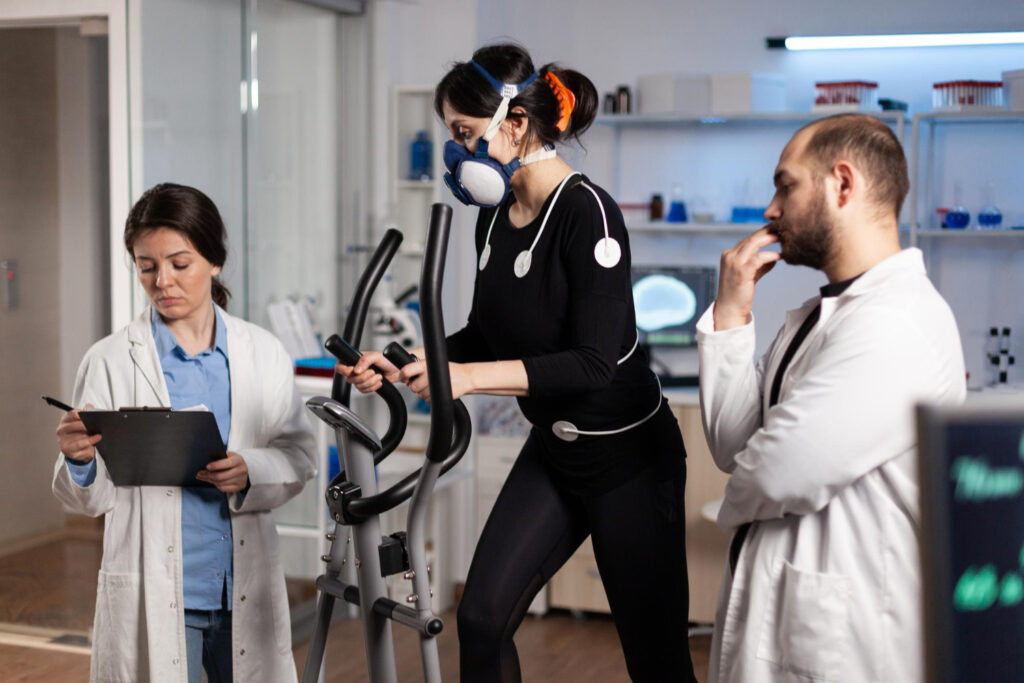
A treadmill test (TMT), also known as an exercise stress test, evaluates how the heart responds to increasing physical activity. During the test, the patient walks on a treadmill while heart rate, ECG activity, blood pressure, and symptoms are monitored.
At Rudra Care Heart and Child Clinic, TMT may be recommended for selected patients when a cardiologist needs to assess exercise tolerance or investigate symptoms that occur during physical activity.
When a person exercises, the heart needs to pump more blood and requires additional oxygen. In some patients, exercise may reveal ECG changes or symptoms that are not present while resting.
A cardiologist may consider TMT for:
Evaluation of selected cases of exertional chest discomfort
Assessment of exercise-related breathlessness
Investigation of reduced exercise tolerance
Evaluation of certain exercise-induced rhythm disturbances
Assessment of the heart’s response to physical activity
Selected patients with known cardiovascular conditions
TMT is not appropriate for every patient. The cardiologist will first assess symptoms, medical history, physical ability, and possible risks.
The test generally involves the following steps:
ECG electrodes are attached to the patient’s chest.
Resting heart rate and blood pressure are recorded.
The patient begins walking on the treadmill.
The treadmill speed and incline gradually increase according to the testing protocol.
Heart rhythm, blood pressure, and symptoms are monitored.
Recovery measurements are taken after exercise stops.
The test may be stopped when the required workload is reached or if symptoms, ECG changes, blood pressure changes, or other safety concerns occur.
The test may provide information about:
Exercise capacity and tolerance
Heart rate response to activity
Blood pressure response during exercise
ECG changes during exertion
Symptoms triggered by physical activity
Certain exercise-related rhythm abnormalities
A TMT does not directly show the coronary arteries. Depending on the findings and clinical risk, additional tests may be needed.
Patients should follow the clinic’s instructions regarding food, clothing, caffeine, and medication. Prescribed medicines should not be stopped unless specifically advised by the treating clinician.
At Rudra Care Heart and Child Clinic, TMT is used as part of an individualized cardiac assessment to help guide further investigation and treatment decisions.